Best AI Food Image Generators for Food Bloggers (Tested & Compared)
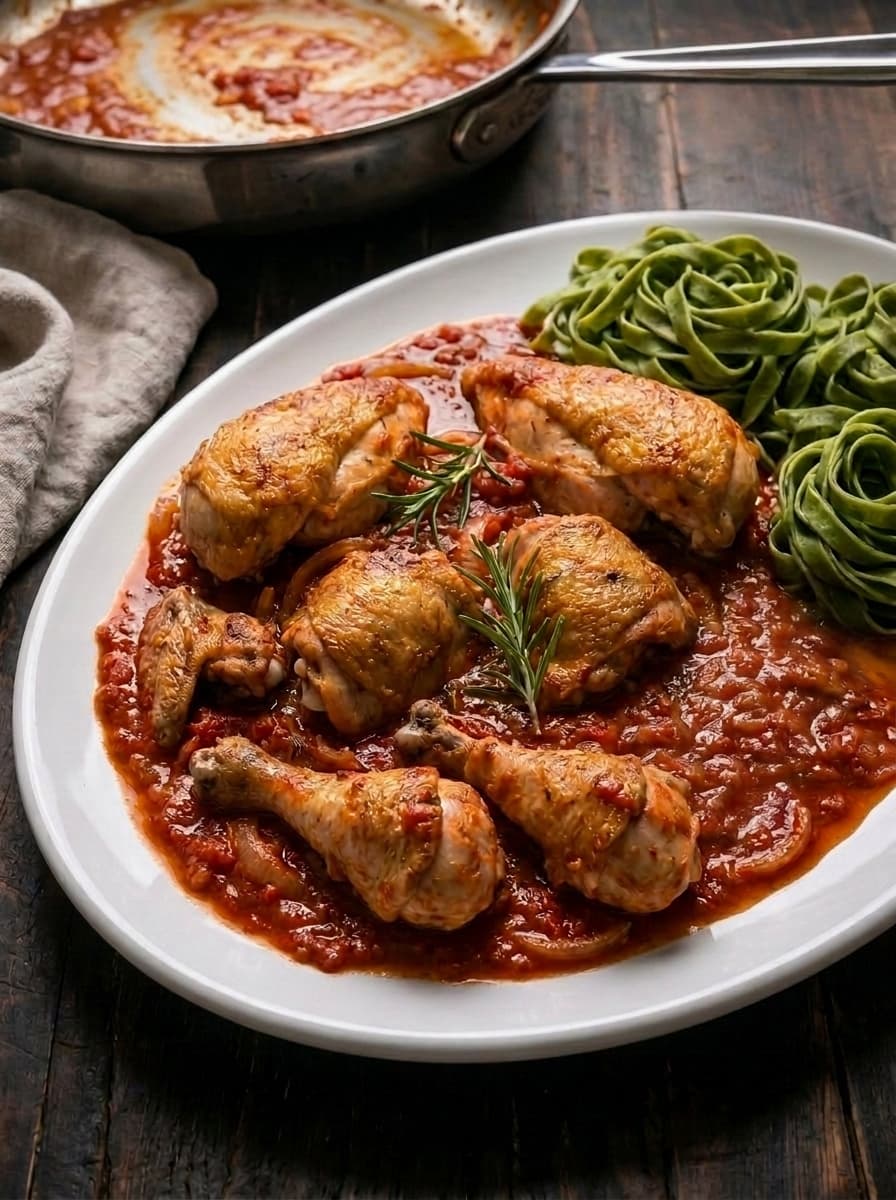
AI food image generators have gone from "plastic-looking garbage" to "wait, that's not a real photo?" in about 18 months. For food bloggers publishing 4–20 recipes per month, AI food images are now a legitimate alternative to expensive photo shoots.
But not all AI food image generators are equal. We've tested the major tools after generating 1,000+ AI food photos for paying clients. Here's what actually works.
What Makes a Good AI Food Image Generator
Before the comparisons, here's what food bloggers specifically need from AI food images:
- Realistic food textures — maillard crust, glossy sauces, steam, melted cheese. If it looks like plastic, it fails.
- Proper food styling — plates, linens, props, backgrounds that look like an editorial shoot, not a stock photo.
- Consistent style — your blog needs a cohesive visual identity. Random AI outputs don't build a brand.
- No AI artifacts — extra fingers on hands, impossible utensil angles, floating ingredients. These kill credibility.
- Blog-ready resolution — minimum 1200px wide for hero images, vertical 2:3 for Pinterest pins.
Midjourney for Food Photography
Best for: High-quality single hero shots and styled compositions.
Midjourney consistently produces the most photorealistic food images of any general-purpose AI tool. The latest version handles textures like caramelization, sauce viscosity, and steam very well.
Strengths:
- Best overall photorealism for food
- Excellent with moody, dark food photography styles
- Good understanding of food styling concepts (overhead, 45-degree, macro)
- Active community sharing food photography prompts
Weaknesses:
- Requires Discord (clunky workflow for batch production)
- Prompt engineering learning curve — generic prompts produce generic results
- No guaranteed consistency between images (each generation is unique)
- $10–$30/month subscription
Verdict: Great for food bloggers who want to learn prompting and don't mind spending time iterating. Not ideal for high-volume production.
DALL-E for Food Photography
Best for: Quick, accessible food image generation with minimal prompting skill.
DALL-E (via ChatGPT) is the easiest AI food image generator to use. Type a description, get an image. The quality is good but not as photorealistic as Midjourney for food specifically.
Strengths:
- Extremely easy to use — natural language prompts
- Good at following specific composition instructions
- Integrated into ChatGPT (no separate app needed)
- Decent with bright, clean food photography styles
Weaknesses:
- Less photorealistic than Midjourney for food textures
- Struggles with dark/moody styles
- Output can look "too perfect" — uncanny valley territory
- Limited style control compared to Midjourney
Verdict: Best for beginners who want quick results. Upgrade to Midjourney or a dedicated service when quality matters more.
Flux for Food Photography
Best for: High-resolution, customizable food images with strong prompt adherence.
Flux is the newer competitor that's gained traction for its photorealism and prompt accuracy. For food photography specifically, it handles compositions and lighting well.
Strengths:
- Strong photorealism, especially for well-lit food
- Good prompt adherence (you get what you describe)
- Available through multiple interfaces (Replicate, ComfyUI, etc.)
- Competitive quality with Midjourney
Weaknesses:
- Requires more technical setup than DALL-E
- Less community and fewer food-specific prompt resources
- Newer tool, still evolving
- Can struggle with complex multi-dish compositions
Verdict: Strong alternative to Midjourney. Worth testing if you're comfortable with slightly more technical workflows.
Dedicated AI Food Photography Services
Best for: Food bloggers who want consistent, blog-ready images without learning AI tools.
Instead of generating images yourself, dedicated services handle the prompting, quality control, and consistency. You send a recipe name, they deliver a set of editorial food photos.
How it works (using Zaytouna Studio as example):
- You send the recipe name and preferred style
- The service generates images using their tested prompt system
- A QC team reviews every image before delivery
- You receive 5–6 blog-ready images in 48 hours
- 3 revision rounds included
Strengths:
- Zero learning curve — you don't touch AI tools
- Consistent brand style across all images
- Human QC catches AI artifacts before delivery
- Bulk pricing makes it cheaper than DIY at volume
- Faster than learning and iterating yourself
Weaknesses:
- Less control over individual images (you review, not create)
- Costs money (vs free tier of some AI tools)
- Dependent on the service's quality and turnaround
Verdict: Best for food bloggers who value their time more than $15/set and want consistent, blog-ready results without learning prompt engineering.
Cost Comparison
| Tool | Cost | Images per $ | Learning Curve |
|---|---|---|---|
| Midjourney | $10–$30/month | ~50–200/month | Medium-high |
| DALL-E (ChatGPT Plus) | $20/month | ~50–100/month | Low |
| Flux (via Replicate) | ~$0.01–0.05/image | Pay per use | High |
| Zaytouna Studio | $15/set of 5–6 | Fixed per recipe | None |
For a food blogger publishing 10 recipes per month:
- DIY (Midjourney): $30/month + 5–10 hours of your time
- Service (Zaytouna): $150/month + 0 hours of your time
If your time is worth more than $12/hour, the service is cheaper.
Prompting Tips for Food Photography
If you go the DIY route, these prompting principles dramatically improve food image quality:
Be specific about the style. "Food photo" gives you garbage. "Overhead editorial food photography on white marble surface, natural window light, shallow depth of field, matte ceramic bowls, linen napkin, f/2.8" gives you something usable.
Specify the camera angle. Overhead, 45-degree, straight-on, and macro all produce very different results. Pick one per prompt.
Name the lighting. "Warm directional natural light from the left" beats "good lighting."
Include props and surfaces. "Weathered oak table, blue linen napkin, tarnished silver spoon, matte stoneware bowl" creates a scene, not just food on a plate.
Avoid hands. AI still struggles with hands interacting with food. If you need process shots, use panel/grid compositions instead.
Which Should You Choose?
| If you... | Use... |
|---|---|
| Want to learn AI and enjoy the process | Midjourney |
| Want quick results with minimal effort | DALL-E |
| Are technically comfortable and want value | Flux |
| Want blog-ready results without any AI work | Dedicated service |
| Are publishing 10+ recipes per month | Dedicated service (time savings compound) |
The "best" tool is the one that produces images your readers can't distinguish from real photography — consistently, at the volume your blog needs.
What to Read Next
- Food Photography for Food Bloggers: The Complete Guide — the full photography playbook
- AI Food Photography vs Real Photography — when to use each
- Food Photography Styles Explained — understand the styles these tools generate
Want blog-ready AI food photography without touching any AI tools? Our AI food photography service delivers 5–6 images per recipe in 48 hours — $15/set, 4 editorial styles, QC-reviewed.